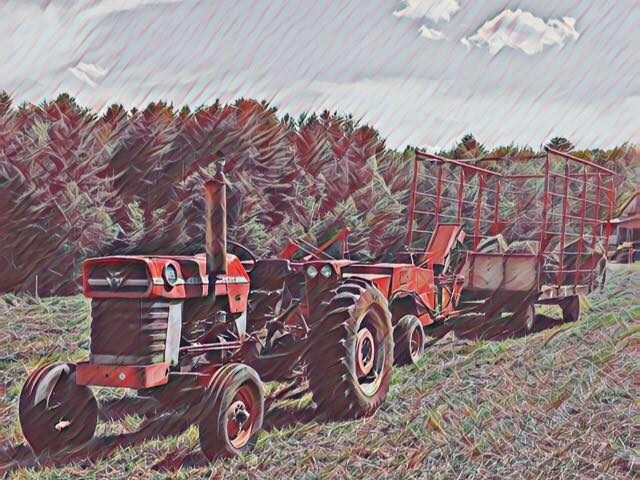
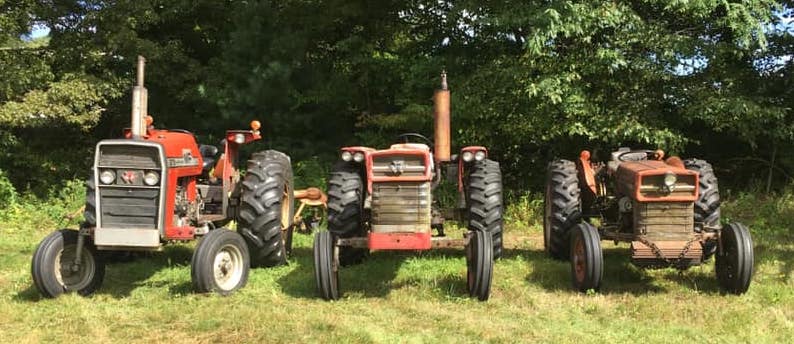
Do you like nerding out about tractors and hay machinery? Me too. Here’s a rundown of what we use to make our hay:
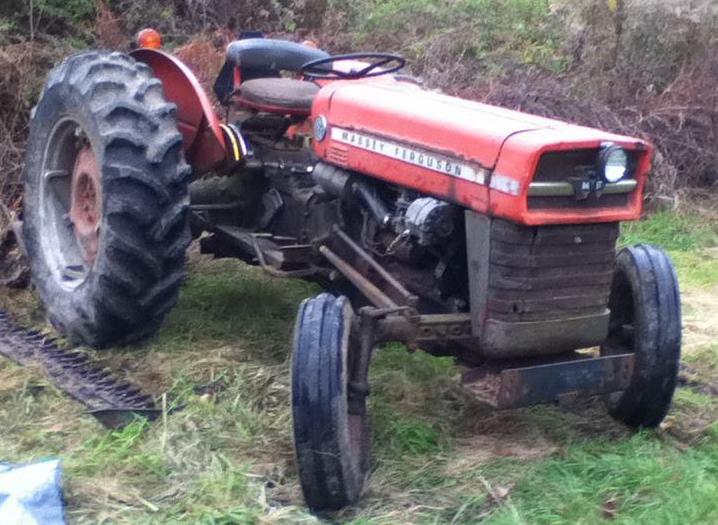
Massey Ferguson 135
What can I say – this little droid and I have been through a lot together. Bought in 2011, before our first haying season – this 35 horsepower 3 cylinder Perkins gas-job ran the whole show for our first four seasons. I’m beyond impressed (proof here!) These days he plays back-up and pulls fertilizer spreading duty, able to hang back at the last set of fields as the rest of the flying circus moves on across town.
Massey Ferguson 165
We got our first diesel for the 2016 season. Despite now being close to 60 years old, this tractor really brought our production to the next level – giving a new sense of horsepower, along with the ability to run two tractors at once. This addition solidified our ability to pull a wagon behind the baler on most fields (first with a chute in 2016, and then the thrower in 2017). These days the 165 tag-teams with our 275 and can run everything comfortably. With a roll-bar and canopy installed in 2022, the 165 is just dreamy to drive on a hot sunny day.
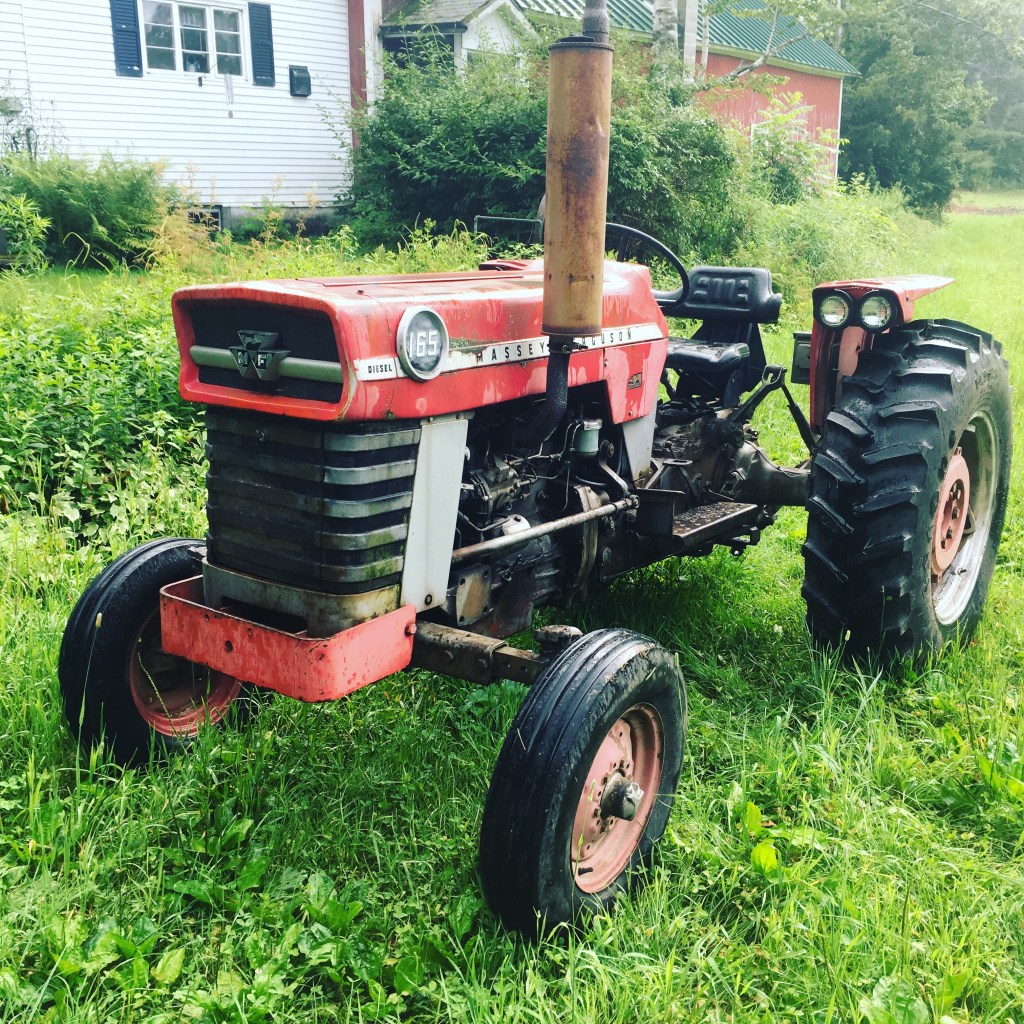
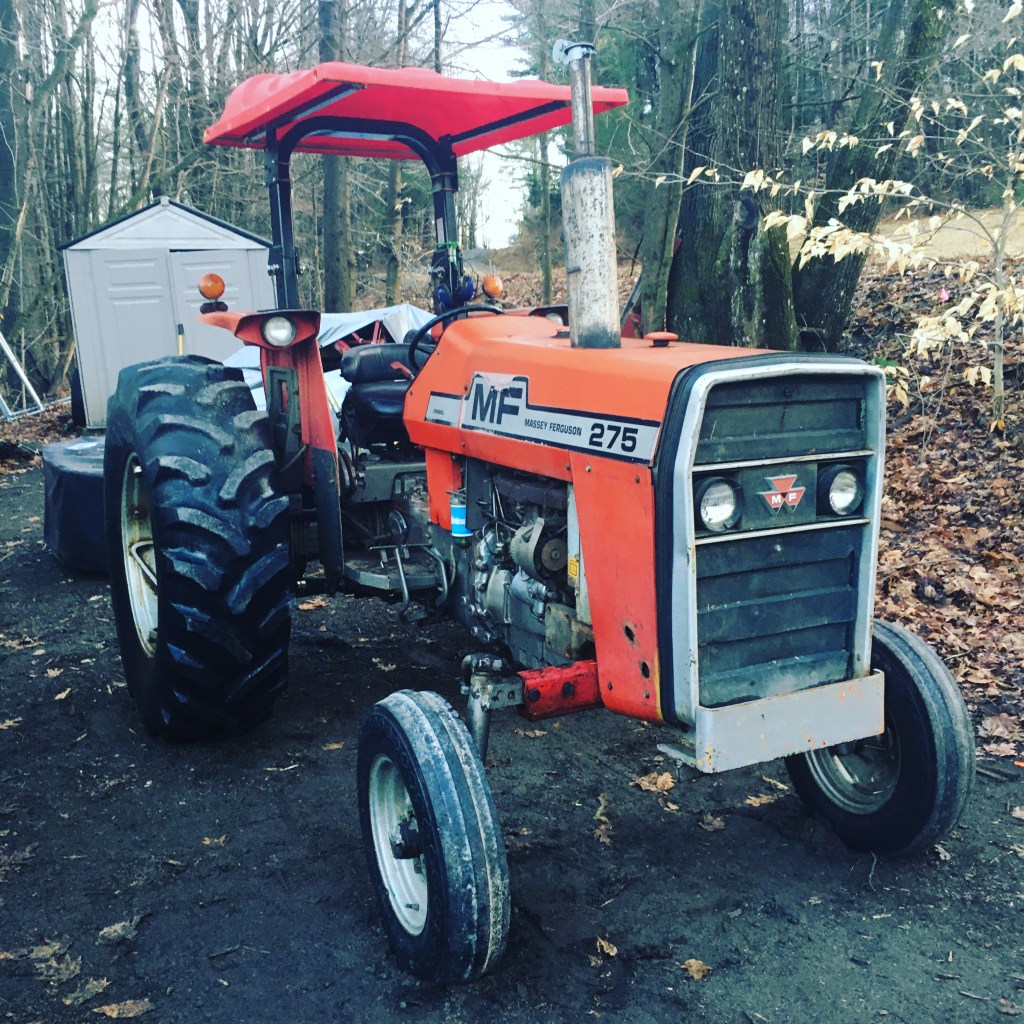
Massey Ferguson 275
As the operation continued to grow, we began to recognize the need for redundancy, and perhaps a little more horsepower for the terrain we hay. In September of 2019, we brought this guy home from northern VT (where he had arrived from across the border in Quebec). Fresh with a new roll bar and canopy we installed in 2020, the now 50-year-old 275 shares the load with the 165, splitting tasks comfortably.
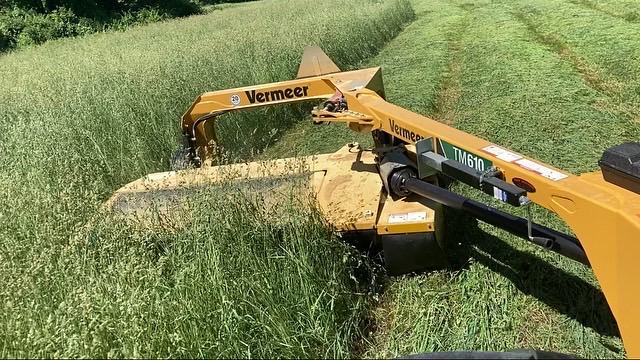
Vermeer TM610 Disc Mower
An upgrade to our operation in 2022, this 8.1 foot disc mower has been a game-changer. Replacing our previous New Holland HM234 disc mower (a 3-point hitch model, with a 5.5 foot cut), we are now able to efficiently tackle the mowing tasks required of our 50+ acre operation. With a 55 horsepower requirement, it runs comfortably on both our Massey 165 and 275 tractors.
Notably, unlike many modern hay mowers, this machine (and its predecessor) does not have a conditioner, meaning that grass stems are not crimped. Even though in theory this means that dry-down takes longer, in our experience the hay quality is better for it – an un-crimped stem means that the leaves are the last part to dry, and don’t shatter as easily before being baled. (If you want to extra nerd out on this conditioner pro/con talk, check out our youtube video discussing it, as well as the first minute or so of this video from Rural Heritage – from 0:54 to 1:38)
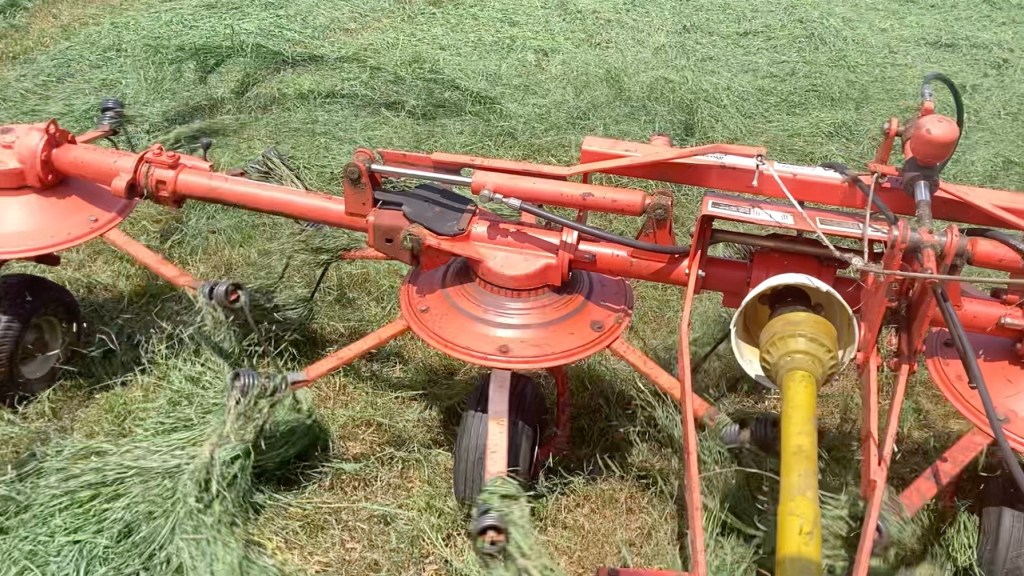
Kuhn GF 5001THA Tedder
A mid-season upgrade in 2024 and replacement for our Vicon Tedder (still kept as a spare, see below), this Kuhn tedder covers more ground, better flips the hay, and is hydraulic-folding for transport – all welcome upgrades to speed and efficiency as we try to cover more ground each year.
Essential to the dry-down process in our New England climate, a tedder works to expose new surface area of mowed hay to sun and wind. Frequently, two or three teddings are required for a batch of hay to reach peak dry-down, before raking into windrows and baling.
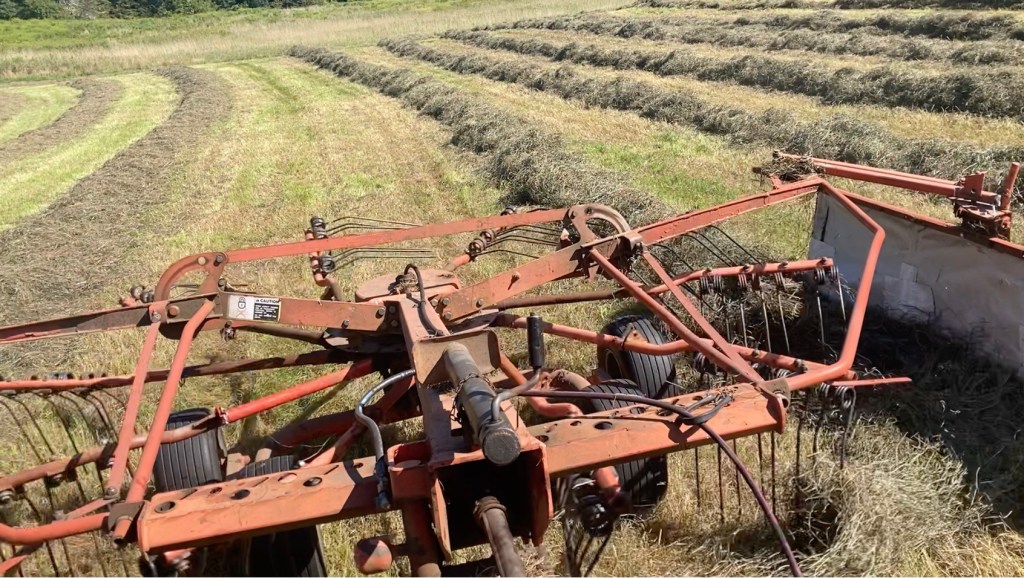
Kuhn GA 4101GTH
An upgrade for the 2024 haying season, funded in part by the Local Farmer Awards program, this rotary rake has redefined our farm’s namesake in the form of the fluffiest, most aerated, easiest to flip windrows imaginable. With a rotary rake we can now make larger windrows that our baler loves to gobble up, with more consistent dry-down of our hay.
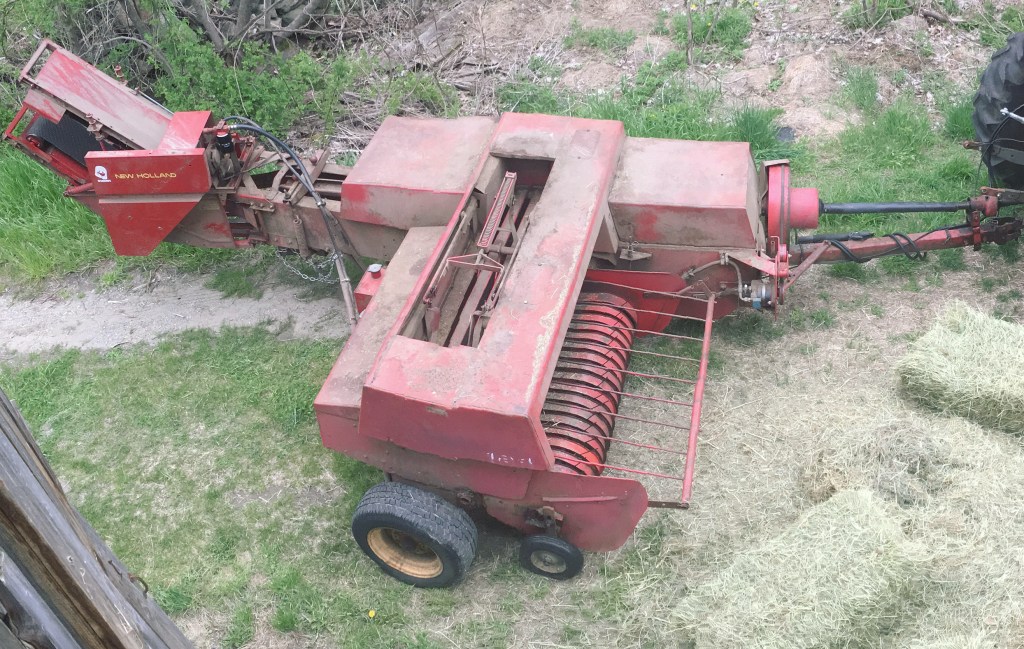
Massey Ferguson 124 Baler
I was lucky enough to wind up with the same model baler that I grew up using with my mentor – so I already knew one just like it nearly inside and out. Even though it’s a 1970’s vintage, this machine continues to be reliable and makes a great bale (in fact, as of the end of 2025, we have put *just* shy of 60,000 bales through this baler!)
We dropped bales on the ground for the first four years (though occasionally using a home-made chute to allow us to trail a wagon and have someone stack.) In 2017, I realized my dreams and got a thrower for it (see below!)
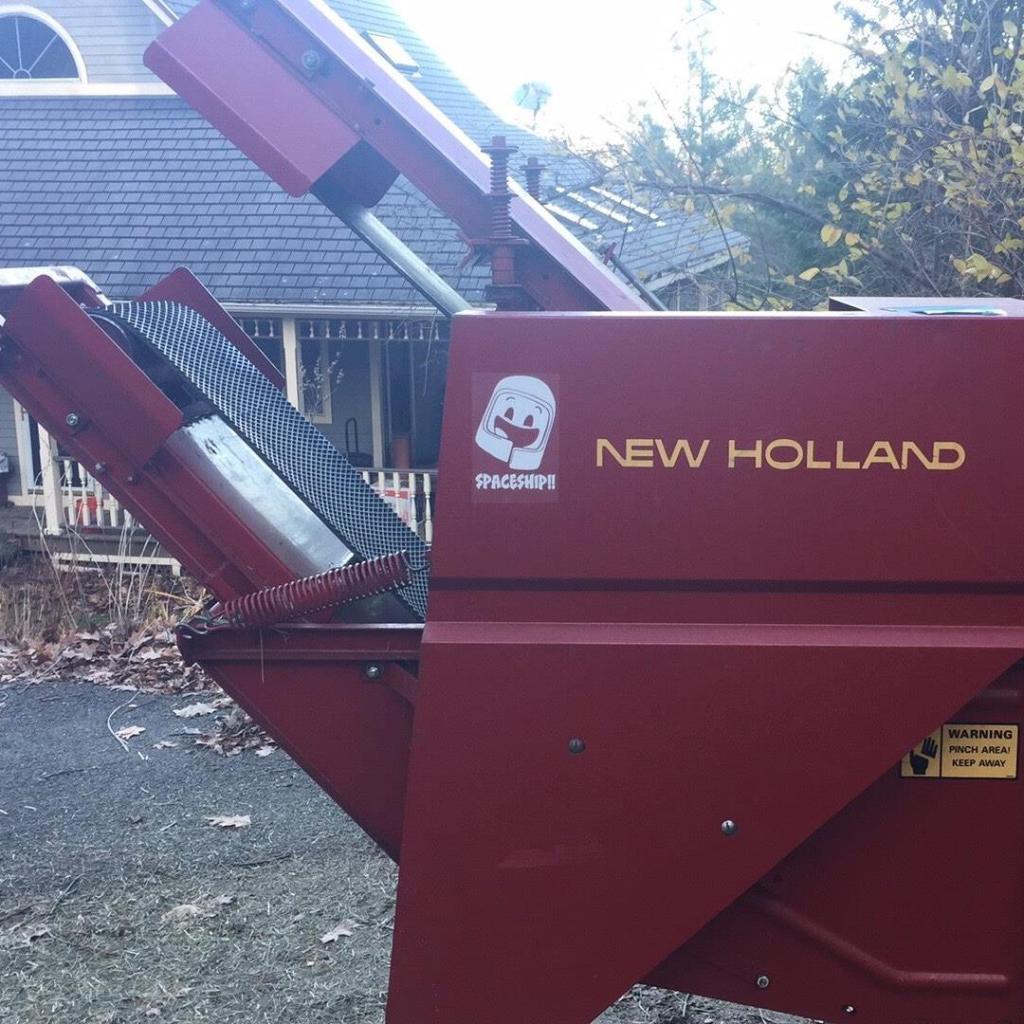
New Holland 70 Bale Thrower
This device *completely* revolutionized our farm for the 2017 season onward, allowing us to more than double our acreage by 2020, and triple it by 2025. Using a pair of fast spinning belts, the bale thrower launches bales straight from the baler into a trailing wagon. No need to have a crew out in the field, just helpers at the barn to unload. (And yes – you read that right: I put a New Holland hydraulic-drive belt thrower on a Massey Baler. I won’t lie – this might just be one of my proudest achievements. See a full walk-around video here.) I still grin every time it shoots a bale.
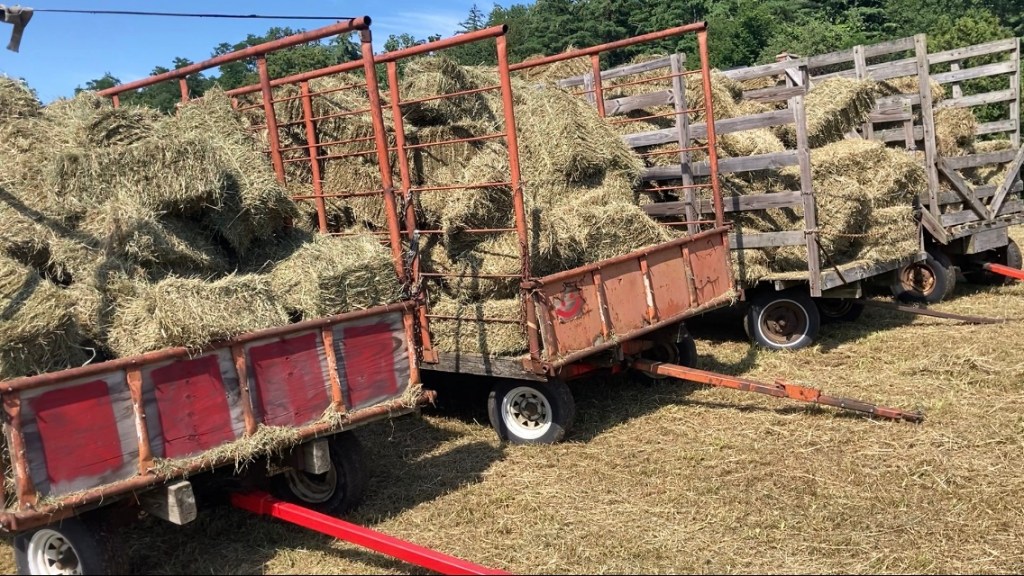
Kicker Wagons
Our farm has gradually added to our “herd” of hungry kicker wagons, whose job is to catch the bales that are flying from the baler + thrower. This setup allows a one-person baling operation (while also baling faster than someone could stack), with help only to unload wagons to off-wagon customers or in the many different barns we use around town.
As of 2026, we have added two more, for a total of six wagons and around 600(+) total bales at any given time!
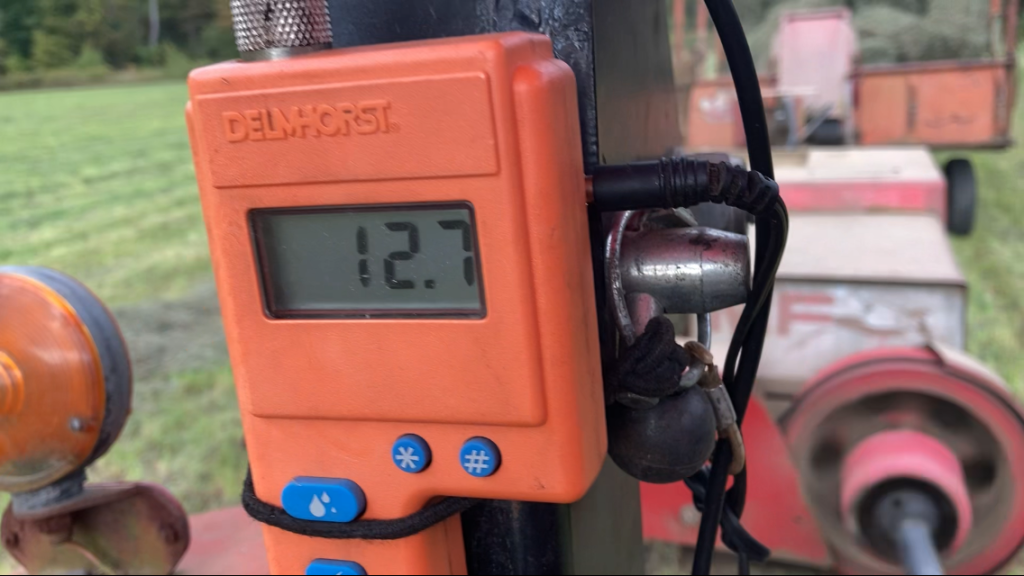
Delmhorst FX2000 Moisture Meter
In 2021 we added this moisture meter to our toolkit, with the ability to not only probe finished bales to know the % moisture, but also (and primarily) hooked into the baler for a live-readout of moisture percent while baling. As someone who grew up making hay with my hay mentor (Doug), I was accustomed to the “by feel” approach of judging dryness/curing – but the ability to quantify and fine tune has increased our hay quality even in these challenging wet weather years.
Spare and Backup Equipment:
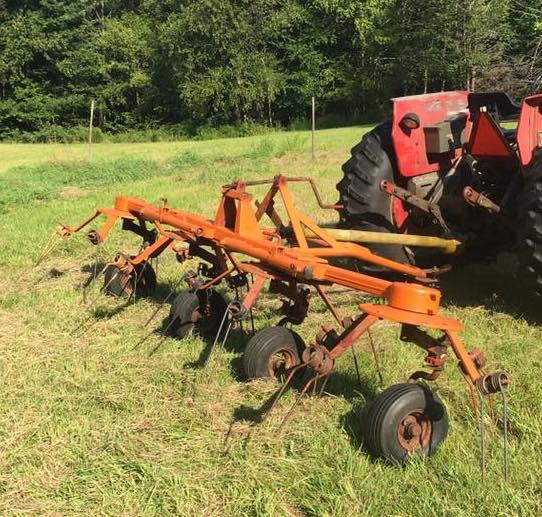
Vicon RS410T Tedder
An upgrade from our older two-head Grimm tedder in 2017, this machine more than doubled our tedding speed. With some quirks as a used machine and a bad bearing in 2024, this tedder is now our backup, just in case our newer (but still used) Kuhn tedder goes down – or occasionally we will use this as a second tedder if we are split amongst farther-flung fields simultaneously.
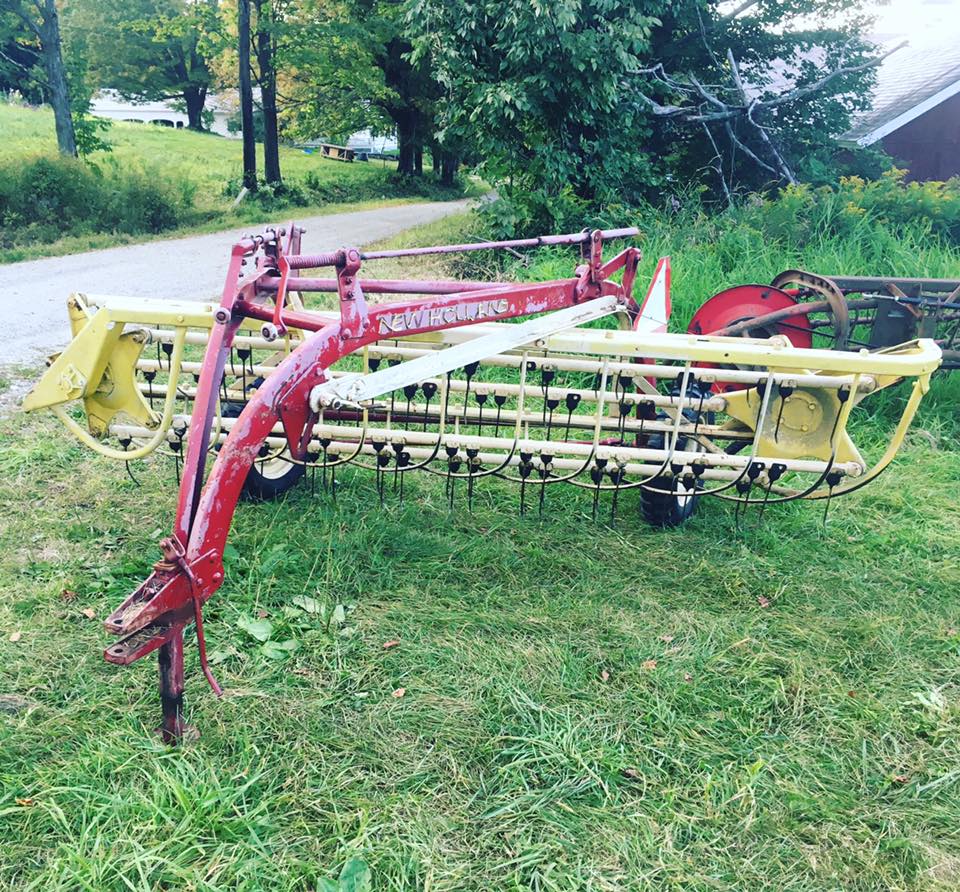
New Holland 256 Hay Rake
Another upgrade in 2017 from our first smaller hay rake (visible just in the background of this picture), this NH rake is seen just about *everywhere* – and for good reason: its construction is both reliable and forgiving. While it does not make as fluffy or aerated windrows as a newer rotary-style rake, it is a very helpful spare machine to have, just in case.
(Want to know even more about our haymaking process? Feel free to Follow us on instagram and like us on facebook!)
(We also have a Youtube Channel with comprehensive video-diaries of each season, if haying content and discussion is your cup of tea!)
 Windrow Farm